
Developing Positive Young Adults: Lessons from Two Decades of YouthBuild Programs
About
“[T]he high school graduation rate [in the United States] has increased in recent years, but high school dropouts…are disproportionately disconnected from work, more likely to live in chronic poverty, and at greater risk for criminal behavior.
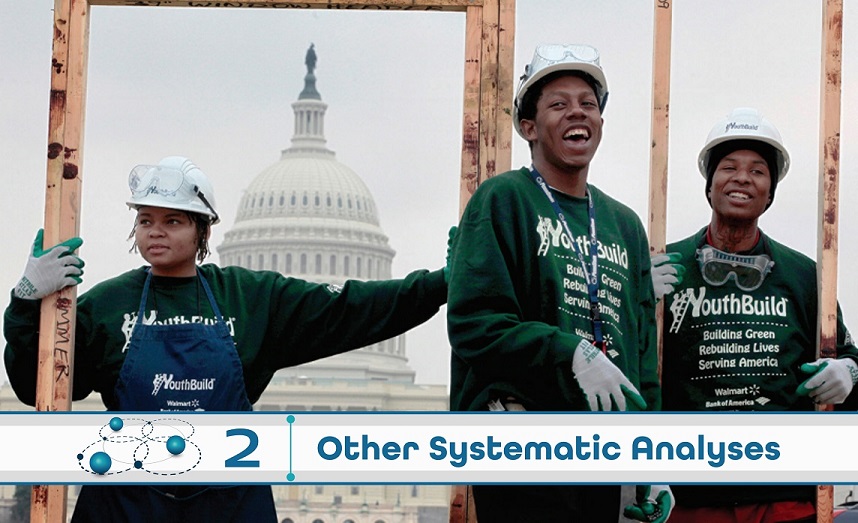
YouthBuild strives to help.…[T]he program offers academic support, job skills training, counseling and case management…and opportunities for community service.…[T]he program aims to deliver these services in a culture that focuses on positive youth development....
A…body of evidence suggests that programs that…incorporate…youth development principles and practices…are more effective in decreasing negative outcomes and increasing young people’s chances of long-term success. While quantifiable measures such as educational attainment…are important to gauge the impact of a program…, it is [also important]…to understand the less tangible outcomes that may predict success....
This report presents findings from two separate research efforts that shed light on the process of youth transformation and identity development in YouthBuild. The first paper [A Framework for Understanding Identify Development: Findings from YouthBuild Programs], written in 1997…, is based on a formative evaluation of early YouthBuild programs between 1991 and 1994” (p.iii). That evaluation included “200…interviews with staff and program participants across…five sites” (p.8).
“The second paper [Transforming Youth from the Inside Out: Program Directors’ Views of YouthBuild’s Potential] presents the findings from a 2014 survey of [108] YouthBuild program directors across the country” (p.iii). “Using a new set of questions based on the findings of [the earlier paper], [the authors] surveyed and interviewed current YouthBuild program directors to determine whether the statements about youth transformation reported more than 20 years ago continue to ring true today” (p.3).
The authors note that additional findings on YouthBuild, including the preliminary results of an impact study, will be available in 2017.
(Abstractor: Author and Website Staff)
Major Findings and Recommendations
Materials
Comments
Content Details
Methodology:
Topics:
Target Populations:
Programs:
Geographic Locations:
Industry Sectors:
- Last Updated:
- Created:
- Resource Publication Date: 2015
- Author(s): Ferguson, Ronald F.; Snipes, Jason; Hossain, Farhana; and Manno, Michelle S.
- Organizational Author(s): MDRC, Harvard University, and WestEd
- Funding Source: Funding source not identified
- Resource Availability: Publicly available
- Posted by: Wesley Peterson
- Posted in: Workforce System Strategies