
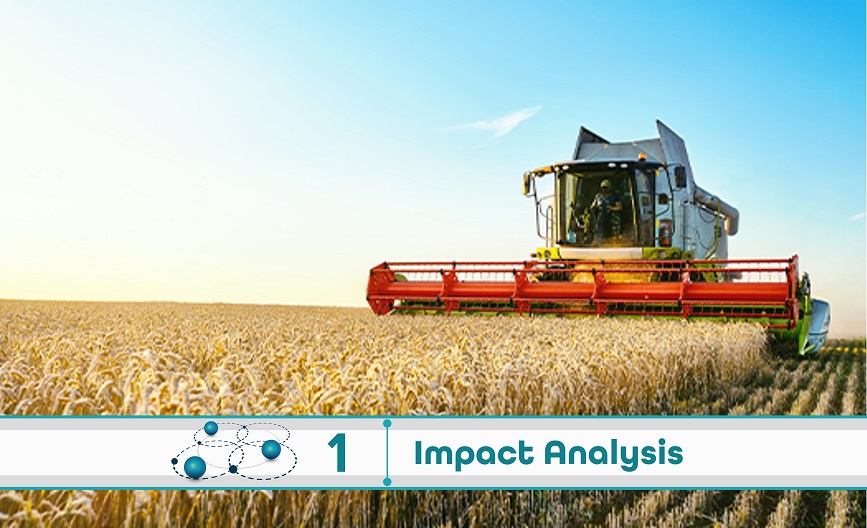
Findings from the National Agricultural Workers Survey (NAWS) 2017-2018
About
The U.S. Department of Labor’s National Agricultural Workers Survey (NAWS) is an employment-based, random-sample survey of U.S. crop workers that collects demographic, employment, and health data in face-to-face interviews. The primary purposes of the NAWS are to monitor the terms and conditions of agricultural employment and assess the conditions of farmworkers. The survey also generates information for various Federal agencies that oversee farmworker programs.
The report focuses on findings for the period covering fiscal years 2017 and 2018 and presents information collected from face-to-face interviews with 2,586 crop workers interviewed between October 1, 2016, and September 30, 2018.
This report contains nine chapters containing information on:
1-3. Crop farm workers’ demographic characteristics, including place of birth, ethnicity and race, work authorization, gender, age, marital status, household size and structure, education, and language ability.
4. Farmworkers’ housing, including the types of housing they live in, the location of their housing in relation to their jobs, and crowding conditions.
5. Farmworkers’ participation in U.S. agricultural employment.
6. Workers’ participation in non-crop employment, including farm jobs in other types of agriculture and periods of unemployment.
7. Workers’ income, assets, and use of assistance programs.
8. Information on farmworkers’ income, assets, and use of assistance programs.
9. Health insurance coverage for farmworkers and their family members, health care utilization in the United States, and barriers to healthcare access.
The report also contains four appendices, A-D. Appendix:
A. Describes the procedures used to select the sample.
B. Displays a map of the NAWS migrant streams.
C. Contains a table of the percentages and means of the principal variables presented in the report.
D. Contains tables of the demographics and employment characteristics covering seven periods from 1989 to 2018.
This report is the fourteenth in a series of Department of Labor publications on the demographic and employment characteristics of hired agricultural workers in the United States.
(This report is 107 pages long.)
Major Findings and Recommendations
The following findings were described in the report:
- 64% of hired farmworkers were born in Mexico.
- 77% of all farm workers were Hispanic.
- 32% of farmworkers self-identified as White, 3% as Black or African American, 6% as indigenous, and 65% of respondents did not select a category.
- Farmworkers in their first year in the United States comprised only 1% of the hired crop labor force.
- Nearly 2/3 of all farm workers had work authorization.
- 87% of farmworkers were settled workers; 13% were migrants.
- 69% of farmworkers were men.
- Farmworkers’ average age was 41.
- 57% of farmworkers were married, and 50% had children.
- 64% of farmworkers reported that Spanish is their primary language.
- The average level of formal education completed by farmworkers was 9th grade.
- 69% of workers drove a car to work, 10% rode with a “raitero,” and 4% took a labor bus, truck, or van. (A raitero is a driver who transports low-wage workers to their jobs.)
- 89% of farmworkers were employed directly by growers.
- 41% of farmworkers worked in fruit and nut crops, 20% in vegetable crops, and 22% in horticulture.
- 84% of farmworkers reported that their basis for pay was an average of $12.32 per hour at their current farm job.
- 55% of farmworkers reported that Unemployment Insurance covered them if they were to lose their current job.
- Farmworkers worked an average of 35 weeks in the past year.
- 80% of workers interviewed expected to continue doing farm work for at least five years.
- During the previous year, farmworkers spent an average of 9 weeks living in the U.S.
- 31% of farmworkers said they held at least one U.S. non-crop job during the previous year.
- Farmworkers’ mean and median personal incomes the previous year ranged from $20,000 to $24,999.
- Farmworkers’ mean and median total family incomes the previous year ranged from $25,000 to $29,999.
- 21% of farmworkers had family incomes below the poverty level.
- 71% of farmworkers stated that they owned or were buying at least one asset in the United States.
- 18% of farmworkers reported that they or someone in their household received some form of benefit from a contribution-based program in the previous two years; 54% said someone in their household received some form of benefit from a needs-based program within the past two years.
- 72% of farmworkers used a health care provider in the U.S. sometime in the past two years.
- 23% reported that health care visits were too expensive.
Materials
Comments
Content Details
Methodology:
Topics:
Target Populations:
Programs:
Geographic Locations:
Industry Sectors:
- Last Updated:
- Created:
- Resource Publication Date: 2021
- Author(s): Ornelas, I.; Fung, W.; Gabbard, S.; Carroll, D.
- Funding Source: U.S. Department of Labor, Employment and Training Administration
- Resource Availability: Publicly available
- Posted by: Wesley Peterson
- Posted in: Workforce System Strategies