
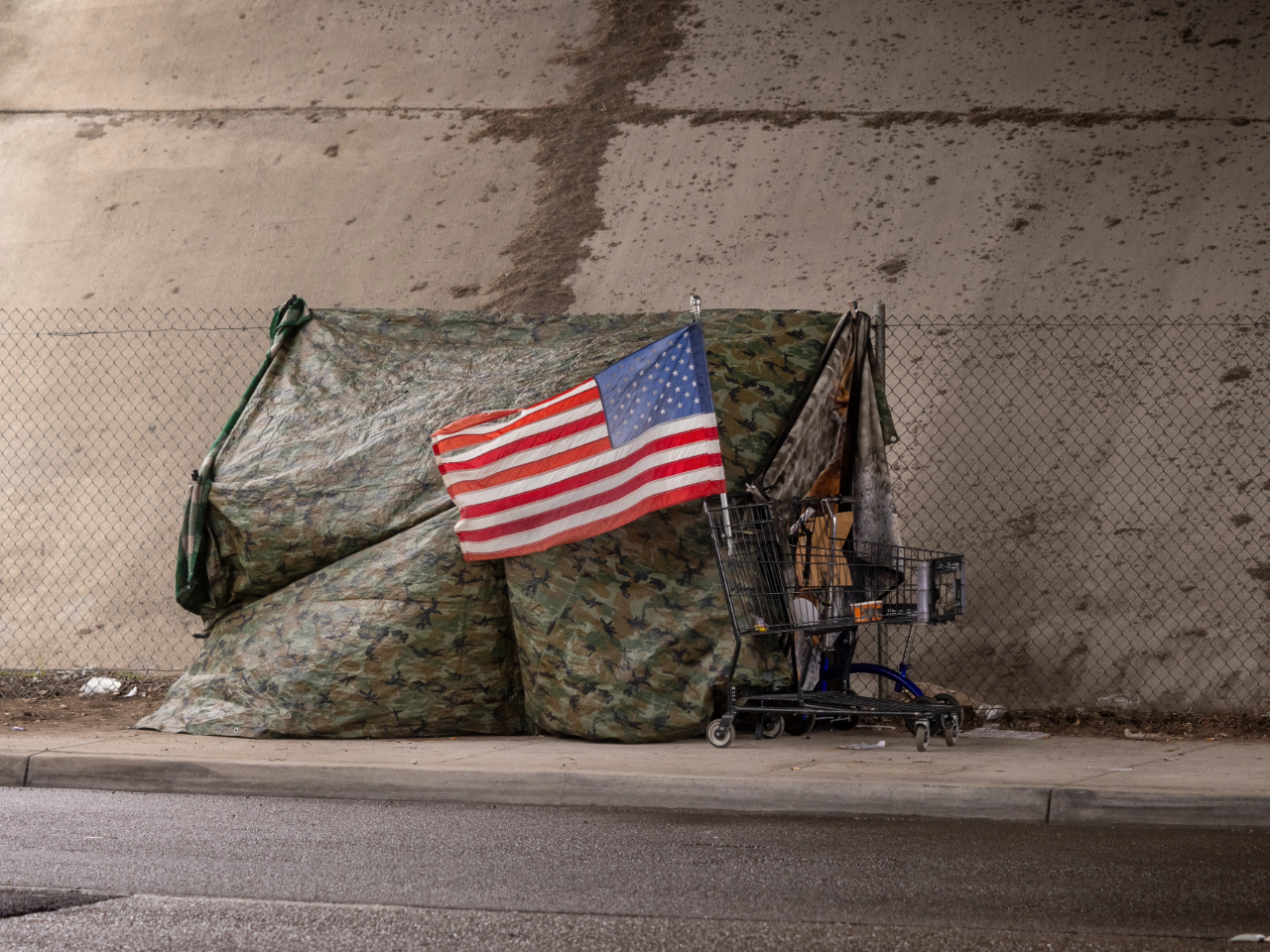
Individual Placement and Support (IPS-SE) for Justice-Involved Homeless Veterans
About
This study examined differences in housing and employment outcomes between homeless Justice Involved Veterans (JIVs) enrolled in two different vocational rehabilitation conditions.
This study evaluates vocational outcomes of veterans experiencing homelessness enrolled in a larger US Department of Veterans Affairs (VA)-funded study. Participants were randomized into two groups: those who participated in a job search group, the About Face Vocational Program (AFVP), and those who received AFVP plus Individualized Placement and Support, Supported Employment (AFVP+IPS-SE).
The combination of homelessness and former incarceration may lead to significant challenges in vocational rehabilitation. One promising method of addressing vocational rehabilitation and vocational reintegration adopted by the VA is Individualized Placement and Support, Supported Employment (IPS-SE). IPS-SE is a vocational program where participants work closely with an employment specialist who works with employers to create employment opportunities fitting the participant's goals. IPS-SE is based on several core principles, including:
- Emphasis on competitive employment.
- Rapid job search.
- Blending of employment and mental health services.
- Job development.
- Individual preferences over finding any job.
- Job supports tailored to the individual
- Benefits counseling.
- Zero exclusion criteria.
(This resource is 4 pages long and is Copyrighted (© 2021) by Wolters Kluwer Health, Inc. The study is publicly available through the provided URL.)
(The study took place in 2021.)
Major Findings and Recommendations
It was found that participants who received supported employment plus group services were significantly more likely to secure employment than the group alone. This significant difference was also found in individuals who identified as chronically homeless. Furthermore, participants who secured employment were significantly more likely to exit homelessness and secure housing, suggesting group membership indirectly affected housing status through improved employment outcomes.
The author identified the following selected findings:
- Vocational rehabilitation groups combined with supported employment are appropriate and effective for persons experiencing homelessness and JIVs seeking employment and may also improve downstream housing outcomes.
- Homelessness is a significant issue affecting U.S. military veterans, as veterans represent 8% of all homeless adults. Although the U.S. Department of Veterans Affairs has made considerable progress in ending and preventing veteran homelessness over the past decade, significant challenges remain.
- Many individuals who secure housing return to homelessness, and there has been modest success in addressing this population's mental health, substance use, and community integration concerns.
Based on the findings, employment appears to be instrumental in exiting homelessness. The data presented here suggest the examined model of vocational rehabilitation is appropriate and effective for homeless JIVs seeking employment. Finally, this study also indicates the rate of employment success in this population is a significant predictor of exiting homelessness. As a result, effective and thoughtful vocational rehabilitation may be helpful to homeless JIVs seeking both employment and stable housing.
Materials
Comments
Content Details
Methodology:
Topics:
Target Populations:
Programs:
Geographic Locations:
Industry Sectors:
- Last Updated:
- Created:
- Resource Publication Date: 2021
- Author(s): LePage, J.; Martin, W.; Crawford, A.; Rock, A.; Parish Johnson, J.; Washington, E.
- Resource Availability: Publicly available
- Posted by: Damon Jones
- Posted in: Workforce System Strategies