
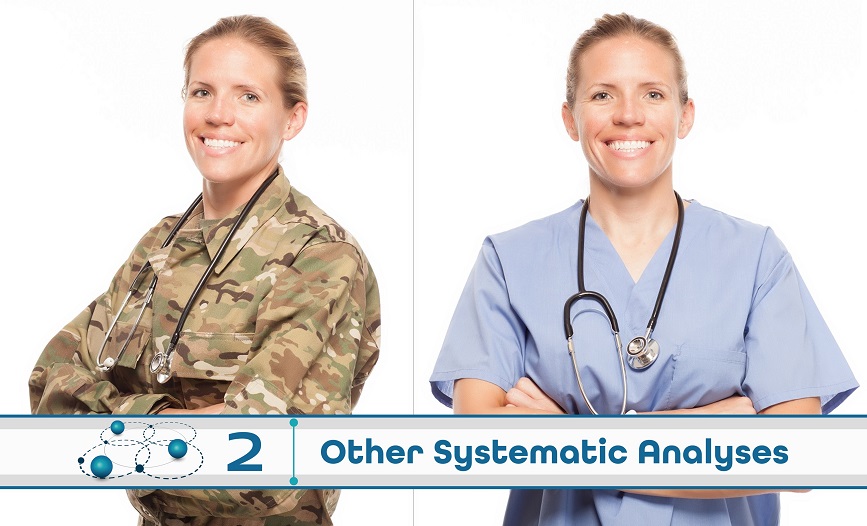
Veterans’ Licensing and Certification Demonstration
About
“Members of the United States’ military are trained in hundreds of occupations with relevance in the civilian workforce. Ideally, veterans…could turn that training and work experience into civilian jobs. However, many civilian occupations have highly formalized pathways for entry, requiring licenses or certifications that present barriers for those trained outside of those pathways. Some veterans…must go through a lengthy process to obtain the formal documentation required to enter their occupation of choice. Those requirements impose additional costs on veterans and on taxpayers, who pay…for the initial military training and for re-training outside of the military through veterans’ education benefits.
The federal government has undertaken several initiatives to streamline professional licensing and credentialing for veterans. Those initiatives include efforts to provide civilian credentials and identify equivalencies between military and civilian occupations. However, ultimate authority for regulating entry into most professions lies with state governments. National professional associations and federal agencies can propose standards and guidelines, but the decision to adopt those standards is made within the states…
[The U.S. Department of Labor] (DOL) contracted with the National Governors Association Center for Best Practices (NGA Center) to carry out an 18-month demonstration project. In partnership with DOL, the NGA Center…select[ed] six states to participate in the 18-month demonstration…Each participating state selected up to three high-demand occupations to focus their licensing and credentialing strategies that corresponded with one of the three pre-selected military occupational specialties: Medic…Police…and Truck Driver” (p.v).
“This interim report on the Veterans’ Licensing and Certification Demonstration [published in 2015] was prepared by the NGA Center…as a summary of state experiences and preliminary findings to date” (p.vi). The report provides “a comprehensive picture of demonstration activities…and offer[s] a common framework for sharing lessons learned with other states interested in replicating these strategies” (p.vi). The report also “describes the approach for the demonstration cost study, which seeks to inform the rationale for policymakers pursuing these strategies. The NGA Center will complete the cost study and issue it as a companion to the final project report to DOL” (p.vi).
(Abstractor: Author and Website Staff)Major Findings and Recommendations
“The demonstration states’ experiences to date suggest that efforts to accelerate licensing and certification of veterans are subject to a range of state- and occupation-specific complexities. But the broad outline of a process to design a strategy was similar for each of the states: examine equivalencies and gaps between civilian and military occupations, identify an appropriate process for filling any state- or occupation- specific gaps, and equip veterans with professional credentials that are easily understood by civilian employers. Thus, an interim framework emerges that outlines the common steps demonstration states took to design and implement strategies to accelerate the licensing and certification of veterans” (p.vi). “Among the principal interim findings of the demonstration project is that state efforts to accelerate licensing for veterans are hampered by information gaps among state agencies, regulatory authorities, training programs, education institutions, and the military. In response, NGA identified a step-by-step process that provides a ‘blueprint’ for state leaders to identify and address information gaps, thereby accelerating veterans’ licensing and certification” (p.vii). Overall, the resource recommends that:
- “Licensing solutions have to be state specific and occupation specific. Demonstration states had slightly different requirements for the same professions, and licensing boards in each state asked to perform their own assessments regardless of the existence of standardized curriculum. Much of the work of professional regulation depends on relationships among licensing boards, legislators, and the state’s executive branch…
- States can work with licensing boards to remove regulations that have no public safety value and ensure that those boards are not drifting from their mission to protect the public…
- Communication across the federal government, military, state governments, and the private sector is essential for making progress…
- Despite the highly technical nature of the work, there are two identifiable categories of solutions: administrative barriers that can be removed without jeopardizing consumer safety, and training gaps. Viewing the challenge through that lens makes a sometimes overwhelming process clearer.
- States do not yet have compelling data sources that can help understand the issue, but have made progress through the demonstration” (p.36-37).
(Abstractor: Author and Website Staff)
Materials
Comments
Content Details
Methodology:
Topics:
Target Populations:
Programs:
Geographic Locations:
Industry Sectors:
- Last Updated:
- Created:
- Resource Publication Date: 2015
- Author(s): Dunker, Amanda; Parton, Brent; and Simon, Martin.
- Organizational Author(s): National Governors Association Center for Best Practices
- Funding Source: U.S. Department of Labor
- Resource Availability: Publicly available
- Posted by: Wesley Peterson
- Posted in: Workforce System Strategies